0
Categories
Main Menu
    Adscarry Logo
    0
    Home>Blogs

    Mobile Phones & Gadgets

    Discover market insights, product guides, platform updates, and curated content in a cleaner enterprise-style reading hub.

    Best Laptops for College Students 2026
    0
    20
    Mobile Phones & Gadgets
    A
    Published By
    Admin 1
    9
    Nov 22, 2026

    Best Laptops for College Students 2026

    A college laptop needs to do more than papers. It may be your school notepad, research library, video-call screen, coding workplace, or evening entertainment device. You'll probably haul it between courses, use it in cramped study spaces, and rely on it when deadlines loom.So, the ideal laptop for college students is the one that fits your education and your habits. A lightweight model is a good idea if you’re going to be running about campus all day. An engineering or animation student may need specialized technology, whereas a student who works mostly on papers and browser tabs can save money.We'll compare five solutions for distinct needs in this guide: Apple MacBook Air M5, Microsoft Surface Laptop 13-inch, Lenovo Yoga 7i 2-in-1, ASUS Vivobook 16, and Acer Nitro V 15. Recommendations are based on published specs and real-world concerns, not hands-on testing.Best College Laptops at a GlanceLaptopBest suited toConfiguration to considerMain buying considerationApple MacBook Air M5, 13-inchGeneral coursework with compatible Mac software16GB memory, 512GB SSDConfirm that your degree supports macOS.Microsoft Surface Laptop 13-inch, SnapdragonStudents wanting a small Windows touchscreen laptop16GB memory, 512GB storageCheck Windows on ARM compatibility.Lenovo Yoga 7i 2-in-1, 14-inchHandwritten notes and flexible study setups16GB memory, 512GB SSDVerify the generation and pen bundle.ASUS Vivobook 16 M1607Students who prefer a larger workspace16GB memory, 512GB SSDCompare exact processor and screen specificationsAcer Nitro V 15Coursework that benefits from NVIDIA graphics16GB memory, RTX 4050, 512GB SSDBalance graphics capability against carrying convenience.Configurations vary within these product families. Match the complete model number before comparing prices.1. Apple MacBook Air M5: The Starting Point for Many StudentsIf you’re a student whose required apps run on Mac, we recommend the 13-inch MacBook Air M5. The reason is simple: It’s tiny, with decent base specs and a screen that is perfectly adequate enough for reading and schoolwork.Apple quotes the base configuration as having 16GB of unified memory and a 512GB SSD. The display is 13.6 inches in size and has a resolution of 2560 × 1664. Connectivity includes MagSafe charging, two Thunderbolt 4 connections, and a headphone jack.That’s a good standard to start with for essays, presentations, research, and compatible programming tools. Students who are working on big creative projects should check their software’s memory and storage recommendations before upgrading.The big question is whether the Mac and the software match. Do not assume that a Mac will run every application needed by your department, particularly if a course requires Windows software, specialized gear, or specific exam tools.Apple said it will start at $999 in the US for education for the 13-inch M5 model at launch. Use that as a reference price, then check current eligibility and checkout cost.Pick it if: Your course supports macOS, and you desire a little laptop to do a variety of student work.2. Microsoft Surface Laptop 13-inch: For a Mobile Windows SetupIf you like Windows and a little touchscreen notebook, the Surface Notebook 13-inch with Snapdragon X Plus is worth a look.Microsoft says it weighs in at 2.7 pounds, features a 13-inch touchscreen and an eight-core Snapdragon X Plus engine. Its store has several memory and storage configurations, including 8GB and 16GB options. If procuring for a new college, we would opt for 16GB where the price allows.The essential difference is what processing platform it is on. This Snapdragon variant runs Windows on Arm. Prior to purchase, check for support for your specific apps, plug-ins, printer drivers, lab equipment, and test software. Don’t just ask your department if “Windows is supported”—inquire about this specific model.Furthermore, compare configuration prices carefully. A seemingly attractive beginning price can mean less RAM or storage than you want.This advice applies to the 13-inch Snapdragon model. Other Surface Laptop sizes and CPU models have different specs.Select it when: You want a small Windows touchscreen computer and have verified that your course tools will work on it.3. Lenovo Yoga 7i 2-in-1: For Handwriting NotesIf you study by typing, reading, and writing notes, the 14-inch Lenovo Yoga 7i 2-in-1 might be worth a look.The convertible design allows you flip between laptop and tablet modes. Lenovo’s Gen 10 model includes Intel Core Ultra CPUs, and the pen is optional, the product brochure says. Check the specific bundle; don't assume a stylus is in the packaging.A convertible is useful for annotating lecture slides, doing mathematics, or drawing diagrams. You can also type out a lengthy assignment without having to switch to a separate device.There are real-world trade-offs. A laptop folded may be less comfortable and less effective than a dedicated tablet, and a touchscreen is only as effective as the use you make of it. When you can, try out the keyboard, the hinge, and the writing posture in person.Look for a setup with 16GB of memory and enough storage for your course. Because many names recur over generations, verify the whole model identifier, screen, processor, and included accessories.Choose it if: You frequently annotate papers or enjoy jotting down notes by hand.4. ASUS Vivobook 16: For a bigger study workspaceA bigger screen is handy if you put course material next to your notes or work with spreadsheets. The ASUS Vivobook 16 M1607 is a solution for those who really like that extra space to work.In the US lineup, ASUS lists a 16-inch 16:10 display and numerous AMD Ryzen AI processor combinations. Available memory, storage, and CPU combinations vary per model.For general coursework, begin by comparing 16GB-memory and 512GB-SSD models. Note that the actual processor name matters; two laptops sold as “Vivobook 16” may have entirely different specifications.The same applies to the display. A larger panel doesn’t always equal the color accuracy needed for photography or design. ASUS’s tables of specifications illustrate the differences between configurations, so creative students should always check the precise panel, not just the family name.A 16-inch laptop also takes up more space in a suitcase and on a lecture hall desk. Think about whether you’ll be using it largely in your room or taking it around campus.Pick it if you want a bigger screen and can get a good configuration at a good price.5. Acer Nitro V 15: If Your Coursework Needs Dedicated GraphicsIf your applications can take advantage of a dedicated NVIDIA GPU, the Acer Nitro V 15 should be on your shortlist.One US option, the ANV15-52-58P7, is powered by an Intel Core 5 210H processor, 16GB of memory, and an NVIDIA GeForce RTX 4050 with 6GB of dedicated graphics memory. Acer claims that this model has a 15.6-inch Full HD display and a 165Hz refresh rate.This model is worth checking out for suitable 3D, rendering, and video applications. This is not a blanket recommendation for all engineering students. Some departments demand certain graphics certs or software settings.It really depends on whether you will need the gear often enough to want to bring it around every day. And if you’re thinking about portability, don’t forget the charger. Check out independent battery and noise measurements for your precise combination.Also separate out game display elements from creative needs. High refresh rate doesn’t equal color accuracy.Choose it if: Your course needs dedicated graphics, or you want one laptop for compatible study and gaming.How to Pick the Best Laptop for College StudentsFirst, Check Your Department RequirementsBefore comparing deals, check your course’s recommended specs. Inquire about operating systems, CPU architecture, testing software, and any programs that were added in subsequent years.A laptop capable of handling first semester essays might not cope with the demands of a later design or computing program.Target for Enough MemoryA new general-purpose college laptop with 16GB is a reasonable buying goal. Students using virtual computers, greater datasets, or demanding creative applications may need more.Check whether you can update RAM. If it can't, choose with your projected holding period in mind.Storage Balance With Your Own FilesA 512GB SSD is a good starting point for most students. If you are storing big video projects or software environments, you might need more. If you are a student who mainly uses documents and university cloud storage, you may need less.Have a separate back-up (whatever the capacity).Consider the whole carrying situation.Think about the laptop, charger, adapters, and any external drives you will be lugging around. A smaller computer may fit better on narrow tables, while a larger screen may be more pleasant for extended work.If you can, try typing out a paragraph and utilizing the trackpad before you buy.Treat battery claims as comparisons, not guarantees.Manufacturer battery tests are conducted under certain conditions. Runtime may vary depending on video calls, brightness, demanding apps, background activity, etc.Locate tests that are relevant to your workload. If you are going to share a USB-C charger with other devices, check the charging requirements.FAQ’sBest Overall Laptop for College?If the course requires macOS, we start with the MacBook Air M5 for normal coursework. Use a Windows alternative if your software or department demands it.Is 8GB RAM adequate for college?It can do lighter tasks, but we would recommend looking at 16GB versions if you are buying a new one. The final selection will be based on your needed applications.Do college students require a dedicated graphics card?Many don't. Before you pay for one, check your applications and department instructions, especially if much of your job is with paperwork, research, and presentations.Are 2-in-1 laptops worth buying?A 2-in-1 laptop can be worth it if you often take notes, annotate PDFs, or draw diagrams. If you're mostly a typist, keyboard comfort and value should be your priority.Should you buy a refurbished laptop?You may also want to consider a refurbished device. Check its quality, battery life, warranty, operating-system support, and return policy, and measure the whole spec against new options.What should I verify before ordering on Adscarry.com?Make sure to verify the whole model number, CPU, memory, storage, condition, warranty, seller terms, and supplied charger. Compare these facts with your course requirements before submitting the order.

    Read More
    Best Phone Under $500 in 2026: Top US Picks
    0
    79
    Mobile Phones & Gadgets
    A
    Published By
    Admin 1
    9
    Oct 29, 2026

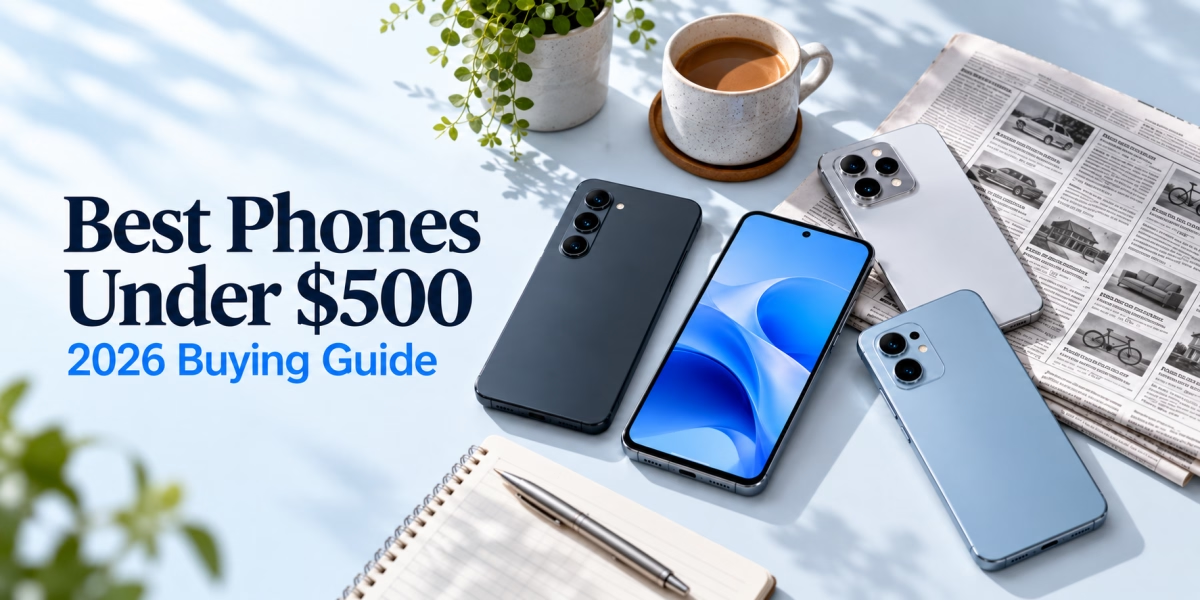
    Best Phone Under $500 in 2026: Top US Picks

    The best phone under $500 for shoppers seeking a large display and a clearly stated long-term update commitment is the Samsung Galaxy A37 5G, our research-based starting pick. The Moto G Power 2026 and Galaxy A17 5G are alternatives for spending less, while the Moto G Stylus 2026 deserves consideration when its selected configuration is priced below $500.A $500 phone budget can cover everyday essentials without requiring a flagship purchase. However, the strongest choice depends on what you need: a comfortable screen, a particular software experience, more money left for accessories, or a built-in stylus.This guide focuses on US shopping options and separates current advertised prices from launch pricing. Recommendations reflect manufacturer information and practical buying considerations, rather than hands-on testing.Compare Phones Under $500Prices below are in USD, before tax and delivery. Check the exact storage option, unlocked status, and final checkout price. Manufacturer pages can show different offers across configurations.PhoneUS price found during researchMain reason to consider itImportant limitationSamsung Galaxy A37 5GFrom $439.99 promotional; $489.99 reference priceLarge AMOLED display and long-term update commitmentHigher-storage versions may exceed the budgetMotorola Moto G Power 2026$399.99Lower spending and a 5,200mAh batteryBattery capacity alone does not prove longer runtimeSamsung Galaxy A17 5G, 128GB$269.99Keeping the purchase well below $500Check suitability for demanding apps before choosingMotorola Moto G Stylus 2026Selected listings at $499.99Built-in stylus for notes and precise inputOther configurations showed $599.99; verify checkoutSamsung’s current listings supplied the A37 and A17 prices. Motorola’s catalog showed the Power and selected Stylus offers, while a separate Stylus product page displayed a higher-priced configuration. The Stylus therefore remains a conditional recommendation.How We Chose These PhonesThe selection considers purchase price, everyday usefulness, manufacturer specifications, and how clearly a phone fits a particular buyer.We have not assigned invented benchmark scores, camera ratings, or measured battery results. A published specification can establish screen size or battery capacity, but it cannot establish how a phone will perform in every situation.Our starting recommendation favors a balanced feature set and a clear update commitment. The alternatives address different priorities rather than forming a universal ranking.For a wider selection, browse Adscarry smartphones and compare individual listing details.1. Samsung Galaxy A37 5G: Our Starting PickThe Galaxy A37 5G is the first model we would investigate for someone planning to keep a midrange Android phone for several years.Samsung specifies a 6.7-inch FHD+ Super AMOLED display with a refresh rate up to 120Hz. The phone also has a 50MP main camera, a typical 5,000mAh battery, and an IP68 rating. Samsung states up to six generations of operating-system upgrades and up to six years of security updates, counted from launch.Those features make it a reasonable starting point for browsing, messaging, streaming, and ordinary photography.Why consider it?The combination of a large display and stated software support is useful for buyers thinking beyond the first year of ownership.The recommendation is an editorial judgment based on that combination. It does not mean the A37 has beaten every competitor in independent camera, gaming, or battery tests.What should you check?Start with storage and the exact US model. Do not assume every version fits beneath $500.Also consider size. A large screen may be enjoyable for reading but less convenient for one-handed use or a small pocket.Best fit: Buyers seeking a broadly equipped Samsung phone with a stated long-term update policy.2. Moto G Power 2026: An Option That Leaves Budget RoomMotorola’s current catalog showed the Moto G Power 2026 at $399.99. Its support specifications list a 5,200mAh battery.That gives it two reasons to investigate: it costs less than the budget ceiling, and it may appeal to buyers who prioritize battery-related specifications.Why consider it?Spending approximately $400 rather than nearly $500 leaves room for a case, screen protection, or another necessary accessory.The remaining budget matters when replacing an older phone whose charger or accessories may not suit the new device.What should you check?Do not translate battery capacity directly into a guaranteed number of hours. Screen settings, signal strength, navigation, gaming, and background apps affect real-world use.Motorola’s charging information also specifies a maximum 30W charging capability and identifies the required charger conditions; the relevant charger is sold separately.Review the exact model’s update policy and carrier compatibility before buying.Best fit: Shoppers who want to stay below the maximum budget while considering a battery-focused model.Explore Adscarry Android phones for comparable listings.3. Samsung Galaxy A17 5G: For Spending Significantly LessSamsung’s US purchase page listed the Galaxy A17 5G at $269.99. That places it comfortably below the $500 ceiling.It belongs on this shortlist because the right purchase does not always require spending the entire allowance.Why consider it?A buyer who mainly needs calls, messaging, email, maps, and occasional browsing should investigate whether a less expensive model meets those needs.Saving money can be more valuable than paying for features that will rarely be used.What should you check?Look closely at the exact configuration, available storage, software policy, and any apps central to your routine.If you regularly edit large videos, play demanding games, or switch between many heavy applications, compare performance evidence before choosing a lower-cost phone.Try a display model when possible. Text size, keyboard comfort, and responsiveness can be more useful purchase clues than a long specification list.Best fit: Budget-conscious buyers who want to evaluate an affordable Samsung option before spending more.4. Moto G Stylus 2026: A Conditional Productivity ChoiceThe Moto G Stylus 2026 stands apart through its built-in stylus. Motorola describes it as supporting precise input, shortcuts, and creative tasks.It is worth investigating if you actually want to write notes, annotate images, or use a pen for more precise interaction.Why consider it?A stylus provides a different reason to buy than a slightly larger camera number or a promotional bundle.Think about a concrete task you would use it for. If none comes to mind, a different phone may suit you better.What should you check?Price verification is essential. Motorola’s category results showed selected offers at $499.99, while another configuration displayed $599.99.Only include the phone in your purchase shortlist when the exact version you want is below $500 without an unsuitable trade-in or service requirement.Best fit: Buyers who specifically want a built-in stylus and can confirm a qualifying price.Why the Pixel 10a Is Not a Main Recommendation HereLaunch prices can become outdated.Google’s current US product listing showed the Pixel 10a starting at $599, placing it above this article’s limit. It should only enter your under-$500 comparison if you find a qualifying current offer with acceptable conditions.The same principle applies to any discounted flagship: check the actual price today, not the amount quoted in an older review.Can You Buy an iPhone Under $500?You can investigate used or refurbished iPhones, but condition and seller terms become central to the decision.Apple introduced the iPhone 17e at $599 in the US, so its standard starting price does not qualify for this guide.For a used device, check battery condition, activation-lock status, carrier restrictions, repair history, and return terms. Confirm that the phone can be activated before completing the transaction.A lower price does not automatically represent better value if the device needs an immediate battery replacement.Browse Adscarry iPhones and assess each listing individually.How to Choose the Right PhoneCheck carrier compatibility first“Unlocked” describes a restriction status; it does not guarantee every network feature on every carrier.Use your carrier’s compatibility process for the exact model or IMEI before purchasing, especially when considering imported or used phones.Compare the complete priceSeparate the phone’s cash price from trade-in credits, financing, and monthly service obligations.A low monthly payment does not tell you the full cost. Add required accessories, activation charges, tax, and delivery where applicable.Match storage to your habitsPhotos, downloaded videos, games, and messaging attachments consume space. Check your current usage to estimate what you need.Avoid paying for extra storage automatically, but do not choose too little simply to meet a headline price.Consider remaining software supportAn older discounted phone may have fewer supported years remaining than a newer model. Check the manufacturer’s policy for the exact device.Buy accessories deliberatelyConfirm what comes in the box before ordering a charger. Choose a case designed for the exact phone rather than a similarly named predecessor.Compare Adscarry phone accessories after selecting the handset.Frequently Asked QuestionsWhat is the best phone under $500 in 2026?The Galaxy A37 5G is our research-based starting pick for buyers who value a large AMOLED display and a stated long-term update commitment. Your choice may differ depending on size, software preferences, and current pricing.Should I spend the full $500?Only if the extra features address your needs. A cheaper phone may leave useful room for accessories and other costs.Is an older flagship better than a new midrange phone?Sometimes, but compare battery condition, remaining software support, repair history, warranty, and carrier compatibility before deciding.Does a larger battery guarantee better battery life?No. Capacity is one factor; software, screen use, network conditions, and applications also affect runtime.Which One Should You Choose?Start with the Galaxy A37 5G for a broadly equipped option, compare the Moto G Power 2026 if you want budget room, and investigate the A17 5G when lower spending is the priority. Choose the Stylus only when its pen is useful to you and its exact checkout price qualifies.Visit Adscarry phone buying guides hub for related comparisons.

    Read More
    Best Phone Under $300 in 2026: Affordable Smartphones Worth Buying
    0
    152
    Mobile Phones & Gadgets
    A
    Published By
    Admin 1
    9
    Oct 21, 2026

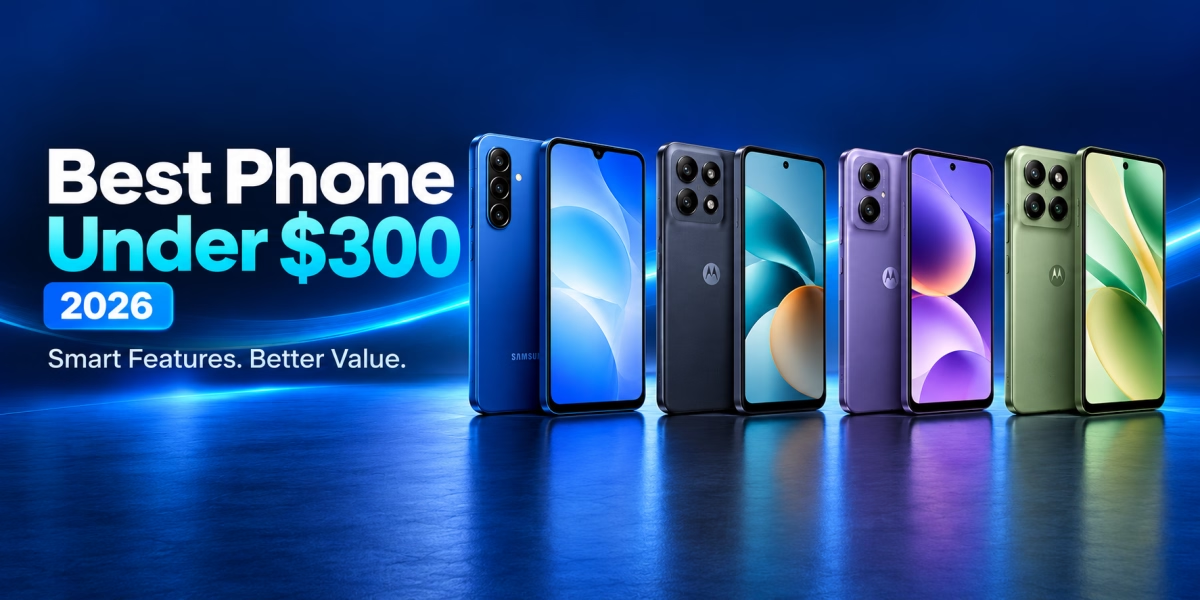
    Best Phone Under $300 in 2026: Affordable Smartphones Worth Buying

    Finding the best phone under $300 starts with deciding what matters most to you. Some shoppers want a bright display for streaming, while others prioritize battery life, camera features, or software updates that help them keep their phone longer.For US buyers, the Samsung Galaxy A17 5G and Motorola’s Moto G lineup offer several options within this budget. You can buy a capable everyday smartphone without depending on a trade-in or signing up for an expensive service plan.Our starting recommendation is the Samsung Galaxy A17 5G for shoppers who prioritize display quality and long software support. The Moto G Power 2026 deserves attention if you prefer more physical RAM and stronger water-resistance specifications.The recommendations below reflect published specifications and US pricing rather than hands-on testing. Reference prices may change, and a phone priced at $299.99 will exceed $300 after sales tax in many locations.Best Phones Under $300 at a GlancePhoneUS reference price*Main reason to consider itSamsung Galaxy A17 5G$199.99 launch priceAMOLED display and long software supportMotorola Moto G Power 2026$299.99 launch price8GB RAM and durability featuresMotorola Moto G 2026$199.99 launch priceEveryday features at a lower priceMotorola Moto G Power 2025$199.99 advertised sale priceDiscounted previous-generation option*Launch prices are reference points, not guaranteed checkout prices. Motorola’s advertised discount on the 2025 model may change.1. Samsung Galaxy A17 5G: For Display Quality and Long-Term OwnershipThe Samsung Galaxy A17 5G is a sensible starting point if you want an affordable phone to keep for several years.Samsung introduced the US model at $199.99, with 4GB of RAM and 128GB of storage. Its 6.7-inch FHD+ Super AMOLED display supports refresh rates up to 90Hz. Samsung also promises six generations of Android and One UI upgrades and six years of security updates.That combination makes it appealing for reading, messaging, watching videos, and shopping online. Long software support also gives buyers a reason to consider it beyond the initial purchase price.The main camera includes optical image stabilization, while the phone has a 5,000mAh battery and supports 25W charging. These are useful features for shoppers who want a balanced everyday device.Its principal specification trade-off is the 4GB of RAM. Buyers who frequently switch between demanding applications should compare it carefully with alternatives offering more physical memory.Choose it if: You value an AMOLED screen, Samsung’s interface, and a lengthy published update commitment.2. Motorola Moto G Power 2026: For Durability and More RAMThe Moto G Power 2026 sits at the upper edge of this budget with a US launch price of $299.99.Its specifications include a 6.8-inch FHD+ display with a refresh rate up to 120Hz, a MediaTek Dimensity 6300 processor, and 8GB of physical RAM. Motorola also specifies IP68 and IP69 water protection and Gorilla Glass 7i.Those features make it worth comparing if you want more memory headroom and prioritize durability. Water-resistance ratings still have defined testing conditions; they should not be treated as a guarantee against every accident.The camera system includes a 50MP main camera with optical image stabilization, alongside an 8MP ultrawide camera with macro capability. A 5,200mAh battery and 30W charging complete its main hardware features.The key buying question is whether these additions justify spending close to $100 more than the lower-priced options.Choose it if: You prioritize physical RAM, a large FHD+ screen, and stronger protection specifications.3. Motorola Moto G 2026: For Everyday ValueThe standard Moto G 2026 is worth considering when you want to spend around $200 rather than use the entire budget.Motorola announced US unlocked availability at an MSRP of $199.99. Published features include a 6.7-inch display with a refresh rate up to 120Hz, 5G connectivity, and Android 16 at launch.Its 5,200mAh battery and 30W charging capability are practical attractions for buyers who use their phone throughout the day. The camera specifications include a 50MP main camera and a 32MP front camera.For messaging, maps, browsing, video calls, and social media, this is a useful model to put on your shortlist. Compare its display resolution, installed memory, and camera features with the Power version before paying more.Saving money on the handset can also leave room for a protective case, compatible charger, or other accessories.Choose it if: You want a recent budget Android phone and prefer to keep your spending comfortably below $300.4. Motorola Moto G Power 2025: For Discount ShoppersA previous-generation phone can make sense when its discount is substantial. Motorola’s US listing has advertised the Moto G Power 2025 at $199.99, reduced from $299.99. Confirm that offer before ordering.Published specifications include a 5,000mAh battery, 30W charging, a MediaTek Dimensity 6300 processor, and 128GB of storage, expandable through microSD.The discount is the reason to investigate this model. Compare its final price with the newer Moto G and Moto G Power rather than assuming an older phone is automatically better value.Also check the remaining software-support period, warranty, and condition. A new phone sold with a manufacturer warranty is a different purchase from a refurbished unit with seller-provided coverage.Choose it if: You find a meaningful discount and its features meet your needs.What to Check Before Buying a Phone Under $300Carrier CompatibilityAn unlocked phone still needs to support your carrier’s network and activation requirements. Confirm the exact US model through your carrier’s compatibility checker, especially when purchasing from a marketplace seller.Software SupportLook at the remaining update period, not simply the Android version installed today. Published support commitments can help you compare the likely useful ownership period.Physical RAM and StorageCheck physical RAM separately from virtual-memory features. Likewise, confirm how much internal storage you receive and whether expandable storage suits the files you want to keep.Camera ResultsMegapixel counts alone do not establish camera quality. Look for sample photographs taken in conditions you care about, such as indoor lighting, moving subjects, or nighttime scenes.Total Purchase CostCompare the handset price, tax, shipping, accessories, and any activation requirement. A low advertised price tied to a new line or trade-in is different from an outright unlocked purchase.Frequently Asked QuestionsWhat is the best phone under $300 for everyday use?The Galaxy A17 5G is our starting recommendation for buyers who prioritize its AMOLED display and long update commitment. The Moto G Power 2026 is worth comparing if RAM and durability matter more.Can I buy a 5G phone for less than $300?Yes. The Samsung Galaxy A17 5G and Motorola models covered here offer 5G connectivity. Actual service depends on your carrier, plan, coverage, and model compatibility.Should I spend the full $300?Only if the additional features solve a real need. A roughly $200 phone may be sufficient for your routine, leaving money for accessories or service.Is a refurbished flagship a better choice?It can be, but compare battery condition, remaining software support, repair history, warranty, and return terms. Evaluate the specific listing rather than the original flagship price.Where should I check availability on Adscarry.com?Search Adscarry.com for the exact model and year. Before ordering, confirm the seller’s description, carrier status, condition, warranty, shipping cost, and return policy.

    Read More
    Apple’s 2026 Lineup: iPhone 18 Pro, iPhone Duo, Apple Watch Series 12, Ultra 4 & AirPods 5
    0
    235
    Mobile Phones & Gadgets
    A
    Published By
    Admin 1
    9
    Sep 10, 2026

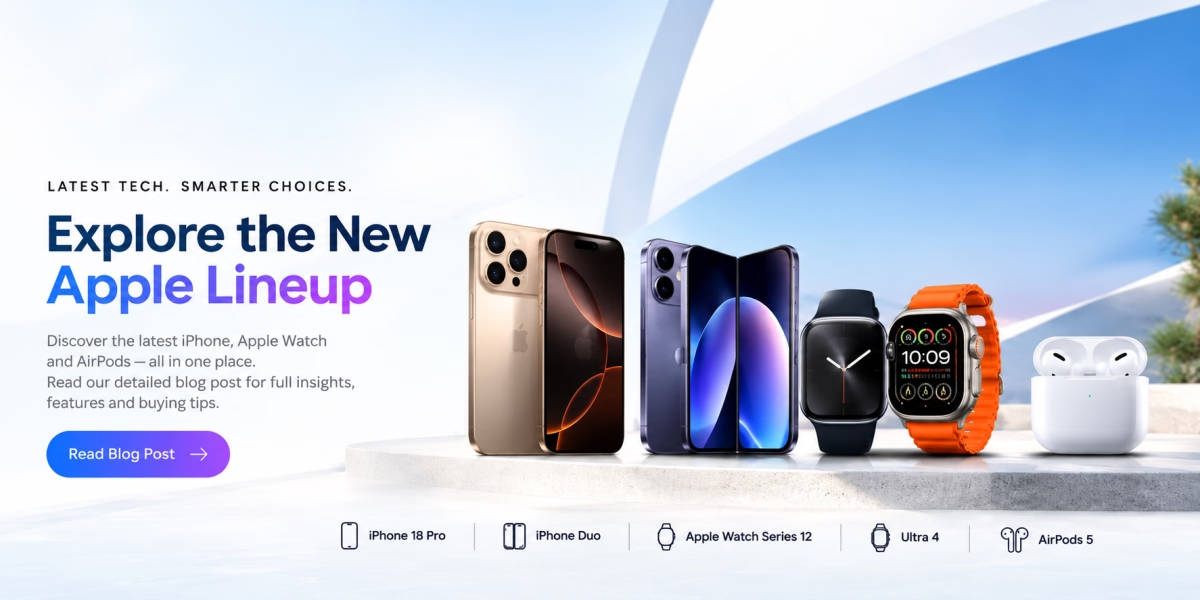
    Apple’s 2026 Lineup: iPhone 18 Pro, iPhone Duo, Apple Watch Series 12, Ultra 4 & AirPods 5

    Apple has once again expanded its product lineup with a major 2026 launch that brings some of its biggest hardware changes in years. For shoppers in the United States, the latest generation includes the iPhone 18 Pro and iPhone 18 Pro Max, the all-new foldable iPhone Duo, Apple Watch Series 12, Apple Watch Ultra 4, and AirPods 5.This year’s lineup is particularly interesting because Apple is moving beyond traditional yearly upgrades. The iPhone Duo introduces a completely new foldable design, the iPhone 18 Pro focuses heavily on photography and performance, while the new Apple Watch models bring more advanced health sensing and intelligent features. AirPods 5 also receive a major upgrade with Active Noise Cancellation in an open-ear design.For shoppers looking to upgrade their Apple devices in the US, here is a closer look at what the newest generation offers.Apple 2026 Products ComparisonProductTypeKey HighlightUS Pre-orderUS AvailabilityStarting PriceiPhone 18 ProSmartphonePro camera system, A20 Pro chipSept. 12, 2026Sept. 18, 2026$1,199iPhone 18 Pro MaxSmartphoneLarger display & extended batterySept. 12, 2026Sept. 18, 2026$1,299iPhone DuoFoldable smartphone7.6-inch inner displayOct. 9, 2026Oct. 23, 2026$1,999Apple Watch Series 12SmartwatchAdvanced health sensingSept. 12, 2026Sept. 18, 2026$399Apple Watch Ultra 4Premium smartwatchRugged design & long battery lifeSept. 12, 2026Sept. 18, 2026$799AirPods 5Wireless earbudsANC & open-ear designSept. 12, 2026Sept. 18, 2026$129iPhone 18 Pro and iPhone 18 Pro MaxThe iPhone 18 Pro lineup is aimed at users who want Apple's most advanced traditional smartphone experience. Apple has placed particular emphasis on camera capabilities, sustained performance and battery life.The biggest camera change is the new 48MP Fusion Main camera with variable aperture. Variable aperture gives photographers more control over how much light enters the camera and can help create different depth-of-field effects. Apple has also introduced new Pro controls within the Camera app, giving users more flexibility when taking photos and recording video.The iPhone 18 Pro and iPhone 18 Pro Max also feature 48MP Fusion Ultra Wide and Telephoto cameras. The system supports up to 8x optical-quality zoom, making the Pro lineup particularly appealing to people who regularly photograph travel, events, people or distant subjects.Performance is powered by Apple's A20 Pro chip, paired with a redesigned vapor chamber for improved sustained performance. This is important for users who spend long periods gaming, editing video, using demanding applications or multitasking.Battery life is another major focus. Apple describes the iPhone 18 Pro lineup as offering significant improvements, with the Pro Max delivering the biggest battery-life increase ever seen on an iPhone.For US buyers, the iPhone 18 Pro starts at $1,199, while the iPhone 18 Pro Max starts at $1,299. Preorders begin September 12, with availability starting September 18.Is there a regular iPhone 18?One important point for shoppers is that Apple's September 2026 event focused on the iPhone 18 Pro and Pro Max, rather than introducing a standard iPhone 18 alongside them. This means buyers comparing listings online should pay close attention to the exact model name, storage capacity and specifications instead of assuming every listing labeled “iPhone 18” represents the same product.On a marketplace such as Adscarry.com, accurate product descriptions are especially important. Sellers should clearly identify whether they are offering an iPhone 18 Pro, iPhone 18 Pro Max or another model.iPhone Duo: Apple’s First Foldable iPhoneThe biggest surprise of Apple's 2026 launch is undoubtedly the iPhone Duo.Rather than following the conventional smartphone design, iPhone Duo folds open to provide a much larger display while remaining relatively compact when closed. Apple describes it as its first foldable iPhone and its largest iPhone display ever.When closed, iPhone Duo has a 5.4-inch outer Super Retina XDR display. When opened, the device provides a 7.6-inch inner display, creating a much larger workspace for apps, entertainment, gaming and multitasking.Both displays feature ProMotion, Always-On functionality and up to 3000 nits of peak outdoor brightness. Apple has also used a special nano-texture finish designed to reduce glare and reflections while helping make the display crease less noticeable.The foldable design is not simply about having a larger screen. Apple has designed iOS 27 to take advantage of different orientations and positions of the device. Users can work with multiple apps, watch content, browse the web and use the larger display in ways that are difficult on a traditional smartphone.iPhone Duo also supports Apple Pencil with USB-C, allowing users to take notes, sketch and mark up documents.Inside, the phone is powered by the A20 Pro chip and includes a 48MP dual Fusion camera system with up to 2x optical-quality zoom. The front camera is positioned beneath the inner display, helping maintain a more uninterrupted screen experience.The iPhone Duo starts at $1,999, making it Apple's premium entry into the foldable smartphone market. It is scheduled to become available in the US beginning October 23, 2026.For shoppers, the Duo could be particularly attractive to professionals, content consumers and users who want tablet-like screen space without carrying a separate tablet.Apple Watch Series 12Apple is also making significant improvements to its smartwatch lineup with the Apple Watch Series 12.The Series 12 introduces Apple's new Health Sensing System, designed to provide more frequent heart-rate and heart-rate variability measurements. These measurements contribute to features such as a new readiness score, giving users additional information about their daily activity and recovery.The watch is powered by Apple's S11 chip and adds new intelligence features designed to make everyday interactions more useful. Apple is also introducing Audio Intelligence capabilities that can help users remember important moments from conversations and recognize important sounds.Health and safety remain central to the Apple Watch experience. Series 12 continues to offer features such as advanced workout tracking, sleep tracking, heart-health notifications, ECG functionality, sleep-apnea notifications, Fall Detection and Emergency SOS.The design has also received attention. Series 12 is available in multiple finishes, including aluminum, titanium and ceramic options. Aluminum models use Ceramic Shield 2, which Apple says is 60 percent tougher than the previous Ion-X glass.In the United States, Apple Watch Series 12 starts at $399, with availability beginning September 18, 2026.For everyday users, Series 12 is likely to be the most balanced choice in Apple's latest watch lineup. It combines health, fitness, communication and safety features without the larger, more rugged design of the Ultra.Apple Watch Ultra 4For athletes, outdoor enthusiasts and users who want Apple's most capable smartwatch, the Apple Watch Ultra 4 takes a different approach.Apple says the Ultra 4 offers the longest battery life of any Apple Watch, including up to 45 hours of Max Extended Workout tracking. It also receives the latest generation of health, fitness and intelligence features.The Ultra line is designed for people who want a more rugged watch for demanding activities. Its larger design, extended battery capabilities and outdoor-focused features make it a natural choice for hiking, endurance training, travel and other activities where battery life matters.The Ultra 4 starts at $799 in the United States.For buyers deciding between Series 12 and Ultra 4, the choice largely comes down to lifestyle. Series 12 is better suited to everyday wear and a lighter design, while Ultra 4 is designed for users who prioritize durability, battery life and demanding fitness or outdoor use.AirPods 5Apple's audio lineup also receives an important update with AirPods 5.The new AirPods 5 introduce Active Noise Cancellation to an open-ear design. Apple says the new model can remove up to 50 percent more external noise than AirPods 4 with Active Noise Cancellation, while maintaining a more natural Transparency mode.AirPods 5 use a new multiport acoustic architecture and next-generation Adaptive EQ to improve sound quality. They also add hands-free access to Siri AI and Live Translation capabilities, making them more useful beyond simply listening to music.The open-ear approach will appeal to people who prefer the traditional AirPods fit instead of silicone ear tips. It also gives users a different balance between awareness of their surroundings and noise reduction.For US shoppers, AirPods 5 start at $129, while a higher configuration with additional features is priced at $149 according to launch coverage. Availability begins September 18.Which Apple Product Should You Buy?The newest Apple lineup covers several different types of users.Choose iPhone 18 Pro if you want a premium smartphone with advanced cameras, strong performance and a more traditional phone design.Choose iPhone 18 Pro Max if you want the largest Pro iPhone and prioritize battery life and screen size.Choose iPhone Duo if you want something genuinely different. Its foldable design provides a much larger display while still functioning as a pocketable smartphone when closed.Choose Apple Watch Series 12 if you want a versatile everyday smartwatch with advanced health, fitness and safety features.Choose Apple Watch Ultra 4 if battery life, outdoor activities, fitness and rugged use are your priorities.Choose AirPods 5 if you want Apple's latest open-ear earbuds with Active Noise Cancellation and improved audio features.Buying Apple Products on Adscarry.comThe launch of Apple's newest products also creates opportunities for buyers and sellers on Adscarry.com, the US Marketplace.Buyers can compare listings, check product condition, review seller information and look for new or pre-owned Apple devices. Sellers can use marketplace listings to reach customers looking for the latest iPhones, Apple Watches and AirPods.When buying premium electronics, however, it is important to check the details carefully. Buyers should verify the exact model, storage capacity, condition, included accessories, warranty information and whether the device is carrier locked or unlocked.For used or open-box products, sellers should provide clear photographs and accurately describe any scratches, wear or missing accessories. For new products, sellers should clearly state whether the item is factory sealed and provide accurate information about the included box and accessories.As Apple's 2026 lineup demonstrates, premium technology continues to evolve quickly. From the completely new foldable iPhone Duo to the camera-focused iPhone 18 Pro, health-focused Apple Watch Series 12, rugged Ultra 4 and upgraded AirPods 5, there are more options than ever for US consumers.Whether you're upgrading your phone, adding a smartwatch to your daily routine or looking for a new pair of wireless earbuds, Adscarry.com provides a marketplace where buyers and sellers can connect around the latest technology and electronics.Frequently Asked Questions1. What is new in the iPhone 18 Pro?The iPhone 18 Pro introduces major upgrades focused on camera performance, processing power, battery life and advanced photography controls. It is designed for users who want Apple's most advanced traditional iPhone experience.2. What is the iPhone Duo?The iPhone Duo is Apple's first foldable iPhone. It combines a compact outer display with a larger foldable screen, giving users a smartphone that can expand into a larger workspace.3. How much does the iPhone Duo cost in the US?The iPhone Duo starts at around $1,999 in the United States, positioning it as Apple's premium foldable smartphone.4. What is the difference between iPhone Duo and iPhone 18 Pro?The biggest difference is the design. The iPhone Duo uses a foldable form factor with a larger internal display, while the iPhone 18 Pro uses Apple's traditional smartphone design and focuses heavily on cameras, performance and battery life.5. What is new about Apple Watch Series 12?Apple Watch Series 12 adds new health-sensing capabilities, improved performance and additional intelligent features while continuing to offer fitness, safety and health-tracking tools.6. What is the difference between Apple Watch Series 12 and Ultra 4?Apple Watch Series 12 is designed as a versatile everyday smartwatch, while Apple Watch Ultra 4 is aimed more at athletes, outdoor users and people who prioritize durability and longer battery life.7. How much does Apple Watch Ultra 4 cost?Apple Watch Ultra 4 starts at approximately $799 in the US, depending on the configuration.8. What are AirPods 5?AirPods 5 are Apple's latest generation of open-ear wireless earbuds, offering improved audio, Active Noise Cancellation and new intelligent features.9. How much do AirPods 5 cost in the US?AirPods 5 start at approximately $129, with higher configurations available at different prices.10. Which new Apple product should I buy in 2026?It depends on your needs. The iPhone 18 Pro is suited to users who want a high-end traditional smartphone, iPhone Duo is designed for those interested in a foldable device, Apple Watch Series 12 is a strong everyday smartwatch option, Ultra 4 targets demanding users, and AirPods 5 are designed for wireless audio.11. When will the new Apple products be available in the US?Availability varies by product. The iPhone 18 Pro, Apple Watch Series 12, Apple Watch Ultra 4 and AirPods 5 are scheduled around Apple's September 2026 launch, while iPhone Duo follows a later availability timeline.12. Where can I buy or sell the latest Apple products in the US?You can explore Apple product listings on Adscarry.com, where US buyers can discover listings from marketplace sellers. Sellers can also list eligible Apple devices and electronics for shoppers across the United States.


    Read More
    Google Pixel 11 Pro & Pixel 11 Pro XL: Specs, Features, Price and Everything You Need to Know
    0
    185
    Mobile Phones & Gadgets
    A
    Published By
    Admin 1
    9
    Aug 17, 2026

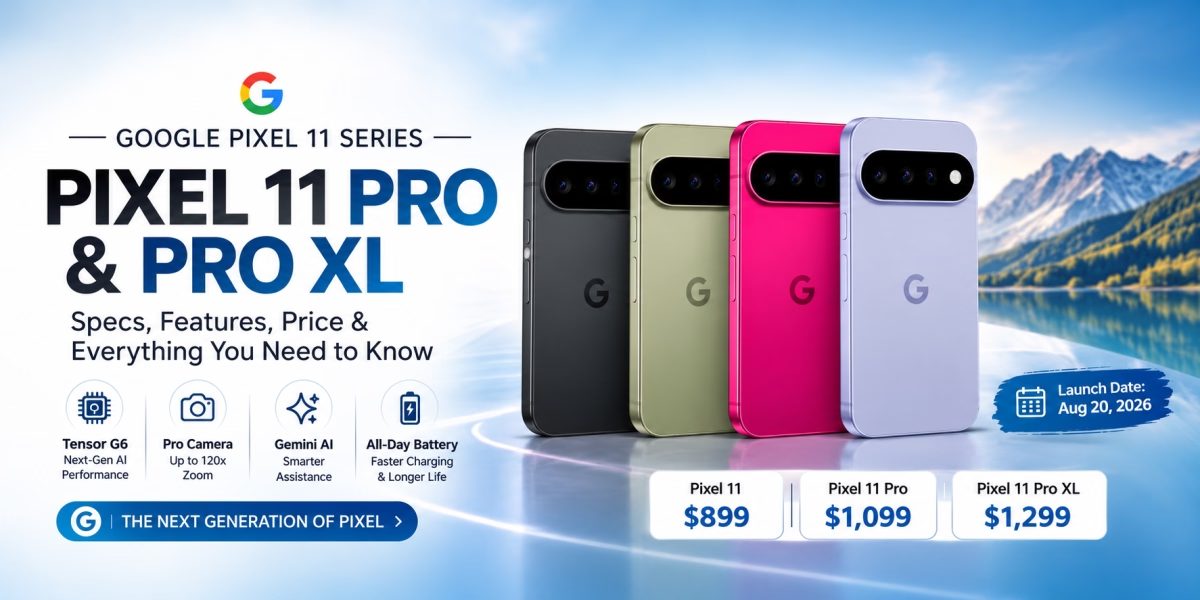
    Google Pixel 11 Pro & Pixel 11 Pro XL: Specs, Features, Price and Everything You Need to Know

    Google Pixel 11 Pro & Pixel 11 Pro XL: Google's New AI FlagshipsThe Google Pixel 11 Pro and Pixel 11 Pro XL are now officially on sale.They offer Google’s newest phone hardware and better camera systems.They also include the new Tensor G6 chipset.Gemini is more closely integrated across the experience.Google unveiled the Pixel 11 lineup on August 12, 2026. This generation features the Pixel 11, Pixel 11 Pro, and Pixel 11 Pro XL, plus the standalone Pixel 11 Pro Fold. For shoppers who want Google’s classic flagship experience, the Pro and Pro XL are the top models in the Pixel line.The approach is simple. Pixel 11 Pro offers Google’s best photography and AI in a smaller, easy-to-hold design. Pixel 11 Pro XL adds a bigger screen and a stronger charging setup.Google has also delivered significant upgrades in durability, camera performance, on-device AI processing, and charging speeds. Across the lineup, each standard Pixel 11 model now starts with 256GB of storage. The Pro models feature Google’s brightest Super Actua displays yet.Here’s what shoppers should understand before deciding between the Google 11 Pro, Pixel 11 Pro XL, and the standard Pixel 11.Google Pixel 11 Series at a GlanceFeaturePixel 11Pixel 11 ProPixel 11 Pro XLProcessorGoogle Tensor G6Google Tensor G6Google Tensor G6DisplayActuaSuper ActuaSuper ActuaPeak Brightness—Up to 3,600 nitsUp to 3,600 nitsStarting Storage256GB256GB256GBPro Zoom—Up to 120xUp to 120xHiLightNoYesYesPixelsnapYesYesYesQi 2.225W25WPixelsnap supportUpdates7 years7 years7 yearsUS Starting Price$899$1,099$1,299All three phones run on Google’s new Tensor G6 platform. The Pro models also get more advanced display and camera features.Google Pixel 11 Pro DesignGoogle hasn’t totally overhauled the Pixel’s look. Instead, it has refined the familiar design language that makes the latest Pixel generations instantly recognizable.Across the Pixel 11 lineup, edge-to-edge glass covers the signature camera bar. Google says the regular Pixel 11 camera bar is 40% slimmer than earlier base-model Pixel designs.The Pro versions stick with a more premium direction, featuring Google’s newest materials and stronger durability.Google sells the Pixel 11 Pro and Pixel 11 Pro XL in four color options:CanyonFogOliveObsidianThe Obsidian version now receives an all-matte treatment.One of the most meaningful improvements isn’t something you’ll notice at first glance. Google says the Pro models now have a new anti-scratch screen coating. It offers over twice the scratch resistance of the last generation.Pixel 11 Pro vs Pixel 11 Pro XL DisplayScreen size is still one of the key factors when deciding between the two Pro models.The Pixel 11 Pro is for shoppers who want top-tier hardware but do not want a huge phone.Google designed the Pixel 11 Pro XL for people who want a bigger screen for streaming and gaming. It also helps with work, taking and editing photos, and daily web use.Both handsets feature Google’s newest Super Actua display, capable of hitting up to 3,600 nits at peak brightness.That level of output should make sunlight readability a standout strength across the Pixel 11 Pro lineup.So the decision mostly comes down to what you prefer:Pick Pixel 11 Pro for a smaller, easier-to-handle flagship.Pick Pixel 11 Pro XL if a bigger screen and a more immersive view are the priority.Google Tensor G6: The Brain Behind Pixel 11Every device in the Pixel 11 range runs on Google’s latest Tensor G6 chipset.Google calls Tensor G6 its quickest and most capable Pixel chipset to date.Instead of centering purely on traditional CPU benchmarks, Google keeps shaping Tensor around the blend of Android, computational photography, and artificial intelligence.Google says the refreshed CPU delivers 25% faster web browsing.It also delivers 15% faster app launches than the Tensor G5 at release.The more compelling story is the AI silicon.Tensor G6 offers 50% additional TPU throughput and supports the newest Gemini Nano model. Google says on-device AI tasks can run up to 3.5x faster.It also says they can use up to 3.5x less power than Tensor G5.This claim is based on Google’s stated test conditions.So the Google Pixel 11 Pro isn’t just receiving quicker components. The aim is for AI features to react sooner while doing more computation locally on the handset itself.Gemini Intelligence Takes Center StageAI has become central to Google's smartphone strategy, and the Pixel 11 generation pushes that approach further.Tensor G6 and Gemini Nano allow the phone to process more intelligent features directly on the device.Google calls the broader experience Gemini Intelligence, with the aim of providing more proactive and personalized assistance.Instead of treating Gemini as simply another app, Google is increasingly integrating AI into the wider Pixel experience.That potentially affects everything from photography and communication to organization and everyday assistance.For buyers already using Google's ecosystem, this deeper integration may become one of the strongest reasons to choose a Pixel over another Android phone.Pixel 11 Pro Camera UpgradesPhotography remains one of the biggest selling points of Pixel phones.The Pixel 11 Pro and Pixel 11 Pro XL receive significant camera upgrades for 2026.Google has introduced a new sensor for the main camera, which the company describes as its best Pixel camera yet.The telephoto camera has also been upgraded.The Pro phones use an improved 48-megapixel telephoto camera with a larger sensor. Google says it delivers 30% greater light sensitivity.That should help improve image quality when shooting at longer focal lengths or in difficult lighting.Google has also enabled Portrait Mode at 5x, giving photographers more flexibility when composing portraits.Up to 120x Pro ZoomZoom is one area where the Pro models clearly separate themselves from the regular Pixel 11.Google combines the upgraded telephoto hardware with Tensor G6 and its latest imaging models to provide Pro Zoom up to 120x.As with any extreme digital/computational zoom system, image quality will vary depending on the scene, lighting and zoom level.But the ability to reach 120x gives Pixel 11 Pro owners significantly greater framing flexibility.The standard Pixel 11 isn't left behind either. Its 5x telephoto camera supports up to 30x Super Zoom.Faster Night Sight PhotographyPixel phones have built much of their camera reputation around computational photography, particularly low-light shooting.Google says Tensor G6 includes an upgraded image signal processor.Combined with redesigned camera software and improved sensors, Night Sight can capture images up to 4.5 times faster while maintaining the image quality Google targets.That improvement matters because great low-light photography isn't just about final image quality.If a phone requires the user to remain still for too long, moving people, pets and other subjects become harder to photograph.Faster Night Sight should make the feature more practical in everyday situations.HiLight: A New Way to See NotificationsOne of the most distinctive features of the Google 11 Pro generation is called HiLight.It is available on Pixel 11 Pro and Pixel 11 Pro XL.Google has integrated colored LED lights around the camera flash. When the phone is placed face down, HiLight can provide information without requiring you to turn on the screen.For example, HiLight can display different patterns while Gemini is listening, thinking or responding.Users can also assign colors to important contacts for incoming calls.The idea is surprisingly simple: allow the smartphone to communicate basic information without constantly demanding your attention.Google says additional HiLight capabilities, including notifications from selected contacts, are expected over time.Pixel 11 Pro Battery and ChargingCharging has also received attention this generation.All three standard Pixel 11 phones support Pixelsnap.The Pixel 11 and Pixel 11 Pro support Qi 2.2 charging at up to 25W, making magnetic wireless charging more convenient.The Pro XL receives an additional advantage in wired charging.According to Google, the Pixel 11 Pro XL can gain up to 15 hours of battery life from a 15-minute wired charge when using Google's specified charging setup.Actual charging performance will naturally depend on the charger, battery level, temperature and usage conditions.Still, faster charging addresses an area where some previous Pixel generations faced strong competition from other Android flagships.Starting Storage Is Now 256GBAnother welcome change is storage.Google says:Pixel 11: starts at 256GBPixel 11 Pro: starts at 256GBPixel 11 Pro XL: starts at 256GBFor premium phones increasingly used for high-resolution photos, videos, offline media and large applications, 256GB is a much more comfortable starting point.It also makes the base configurations more attractive for buyers planning to keep their phones for several years.Seven Years of Pixel UpdatesLongevity is increasingly important when spending more than $1,000 on a smartphone.Google promises seven years of OS, security and Pixel Drop updates for its latest Pixel phones.That significantly extends the useful software life of the Pixel 11 series.It also means buyers who don't replace their phones every two or three years can continue receiving major Android updates and security improvements for much longer.Improved Pixel SecurityGoogle has introduced its new Titan M3 security chip alongside Tensor G6.The hardware and software security architecture is designed to protect sensitive information and strengthen the phone against evolving threats.Google is also introducing post-quantum cryptography into secure boot.Security improvements may not generate as much excitement as a new camera or brighter display, but they matter increasingly as smartphones store banking information, passwords, personal photographs, business data and digital identities.Pixel 11 vs Pixel 11 ProThe regular Pixel 11 deserves consideration before spending extra on a Pro model.It uses the same Tensor G6 generation and starts with the same 256GB storage capacity.Pixel 11 also receives a substantially upgraded camera system, including a new larger 48MP main sensor.Google says the new sensor offers 56% greater light sensitivity than the previous generation base Pixel.Its 5x telephoto camera can reach up to 30x Super Zoom.However, moving to Pixel 11 Pro gives you Google's premium Super Actua display, upgraded Pro camera system, up to 120x Pro Zoom and HiLight.The price difference in the US is $200 at launch.For many buyers, that makes Pixel 11 Pro the sweet spot in the range.Pixel 11 Pro vs Pixel 11 Pro XLThe decision between the Pro and Pro XL is more straightforward.Both deliver the premium Pixel experience.The Pro XL is primarily for buyers who want the larger format and its enhanced charging capabilities.FeaturePixel 11 ProPixel 11 Pro XLTensor G6YesYesSuper ActuaYesYesUp to 3,600 nitsYesYesPro camera systemYesYesUp to 120x Pro ZoomYesYesHiLightYesYesStarting storage256GB256GB7 years updatesYesYesUS starting price$1,099$1,299If portability matters, choose the Pixel 11 Pro.If you want Google's biggest traditional flagship experience, choose the Pixel 11 Pro XL.Google Pixel 11 Pro Price in the USAGoogle has confirmed the following US starting prices:Google Pixel 11: $899Google Pixel 11 Pro: $1,099Google Pixel 11 Pro XL: $1,299The phones were announced and opened for preorder on August 12, 2026.Google says retail availability begins August 20, 2026 through the Google Store and retail partners.Prices will vary according to storage configuration, retailer, trade-in promotions and other offers.Which Google Pixel 11 Should You Buy?Buy Pixel 11 if:You want Tensor G6 and the core Pixel 11 experience while keeping the price as low as possible.Buy Pixel 11 Pro if:You want Google's best conventional Pixel camera experience and premium display without moving to an oversized phone.For many buyers, this is likely to be the most balanced option.Buy Pixel 11 Pro XL if:You want the larger premium Pixel experience, more screen space and the Pro XL's faster wired charging capabilities.Is the Google Pixel 11 Pro Worth It?At $1,099, the Pixel 11 Pro is firmly positioned as a premium flagship.Its value depends on what you prioritize.The combination of Tensor G6, Gemini Intelligence, upgraded cameras, 120x Pro Zoom, a 3,600-nit Super Actua display, HiLight and seven years of updates creates a strong package for buyers who prefer Google's Android experience.The regular Pixel 11 remains the value-oriented choice at $899.But the $200 upgrade to the Pro brings several features that photography enthusiasts and power users are more likely to appreciate.The Pro XL requires another $200, making it more appropriate for buyers who specifically want the larger format.Frequently Asked QuestionsWhat is the Google Pixel 11 Pro?The Google Pixel 11 Pro is Google's premium 2026 Pixel smartphone. It features the Tensor G6 processor, Gemini Intelligence, an upgraded Pro camera system, Super Actua display and up to 120x Pro Zoom.How much does Google Pixel 11 Pro cost?The Pixel 11 Pro starts at $1,099 in the United States.How much is the Pixel 11 Pro XL?The Google Pixel 11 Pro XL starts at $1,299 in the US.How much does the Google Pixel 11 cost?The standard Pixel 11 starts at $899 in the United States.Does Pixel 11 Pro have Tensor G6?Yes. Pixel 11, Pixel 11 Pro and Pixel 11 Pro XL are all powered by Google's Tensor G6 processor.What is the difference between Pixel 11 Pro and Pro XL?The main distinction is size and the resulting user experience. The Pixel 11 Pro is the more compact premium model, while Pixel 11 Pro XL provides a larger display experience and enhanced wired charging.Does Pixel 11 Pro have 120x zoom?Yes. Google says the Pixel 11 Pro and Pixel 11 Pro XL support Pro Zoom up to 120x, powered by their upgraded telephoto camera, Tensor G6 and computational imaging technology.How much storage does Pixel 11 Pro have?Google has increased the starting storage across the Pixel 11, Pixel 11 Pro and Pixel 11 Pro XL to 256GB.How long will Google support Pixel 11?Google says its latest Pixel 11 phones receive seven years of OS, security and Pixel Drop updates.When is the Pixel 11 Pro available?Google announced the Pixel 11 series on August 12, 2026, with preorders opening the same day. US retail availability begins August 20, 2026.Final VerdictThe Google Pixel 11 Pro and Pixel 11 Pro XL represent a meaningful evolution of Google's flagship smartphone strategy rather than a complete redesign.Tensor G6 brings faster performance and significantly stronger on-device AI processing. The Pro camera system gets upgraded sensors, faster Night Sight and up to 120x Pro Zoom. Meanwhile, the 3,600-nit Super Actua display, HiLight notifications, improved durability, faster charging and seven-year software commitment strengthen the overall package.For most buyers looking for Google's premium experience, the Pixel 11 Pro offers the strongest balance between size, features and price.The Pixel 11 Pro XL makes more sense if you specifically want the larger display and flagship XL experience.And for shoppers who want Tensor G6 and the latest Pixel features without spending over $1,000, the standard Pixel 11 remains an important alternative.With prices starting at $899 for Pixel 11, $1,099 for Pixel 11 Pro and $1,299 for Pixel 11 Pro XL, Google now has three clearly differentiated options for US Android buyers in 2026.

    Read More
    Best Smartphones in USA 2026: Top iPhone, Samsung, Google Pixel & Android Phones
    0
    338
    Mobile Phones & Gadgets
    A
    Published By
    Admin 1
    9
    Aug 9, 2026

    Best Smartphones in USA 2026: Top iPhone, Samsung, Google Pixel & Android Phones

    Best Smartphones in USA 2026The U.S. smartphone market in 2026 offers more choice than ever, with major manufacturers competing on artificial intelligence, camera performance, battery efficiency, displays, durability and ecosystem integration. Apple, Samsung and Google remain some of the most important names for American buyers, while brands such as OnePlus continue to provide compelling Android alternatives.Choosing the best smartphone is no longer simply about buying the device with the fastest processor or highest-resolution camera. The right phone depends on how you use it. Some buyers prioritize photography and video, while others need battery life, gaming performance, productivity features or years of software updates.For shoppers comparing smartphones on Adscarry.com, this guide covers some of the best phones available in the USA in 2026 while also looking ahead to major upcoming devices, including Apple's expected next-generation iPhones and Google's upcoming Pixel lineup.Best Smartphones of 2026 at a GlanceSmartphoneBest ForDisplay ClassCamera HighlightPlatformCategorySamsung Galaxy S26 UltraBest premium Android6.9-inch200 MP main cameraAndroidUltra flagshipApple iPhone 17 Pro MaxBest premium iPhoneLarge Pro displayPro camera systemiOSPremium flagshipGoogle Pixel 10 Pro XLAI & photography6.8-inchComputational photographyAndroidPremium flagshipGoogle Pixel 10 ProCompact premium Android6.3-inchAI-powered cameraAndroidPremium flagshipSamsung Galaxy S26+Large-screen Android6.7-inch50 MP main cameraAndroidFlagshipSamsung Galaxy S26Everyday flagship6.3-inch50 MP main cameraAndroidFlagshipOnePlus flagship modelsPerformance & valueLarge AMOLEDMulti-camera systemAndroidPerformance flagshipSpecifications and pricing can vary according to configuration, carrier, retailer and promotions.1. Samsung Galaxy S26 Ultra: Best Premium Android PhoneThe Samsung Galaxy S26 Ultra is one of the strongest choices for buyers looking for a high-end Android smartphone in 2026.Samsung lists the S26 Ultra with a 6.9-inch display, 200 MP wide camera, 50 MP telephoto camera and Snapdragon 8 Elite Gen 5 for Galaxy processor. Samsung also emphasizes improved AI processing, enhanced cooling and its built-in Privacy Display technology.The S26 Ultra is particularly attractive for users who want one smartphone for photography, entertainment, productivity and demanding applications. Its large display makes it well suited to video streaming, gaming, editing photos and multitasking.Samsung's Galaxy AI features are another major part of the experience. AI-assisted photo editing, contextual suggestions and productivity functions increasingly make the software just as important as raw hardware specifications.For buyers who want Samsung's most feature-packed traditional flagship, the Galaxy S26 Ultra is one of the first models to consider.Best for: Premium Android buyers, mobile photography, productivity, AI features and large-screen users.2. Apple iPhone 17 Pro Max: Best Premium iPhoneFor shoppers who prefer iOS, the iPhone 17 Pro Max remains one of the most compelling premium iPhones to consider during 2026.Apple's Pro Max phones are designed for buyers who want a large display, premium performance and Apple's most advanced mobile camera capabilities. The combination of iOS, Apple silicon and integration with devices such as Mac, Apple Watch and AirPods remains a major reason many U.S. consumers stay within the Apple ecosystem.The iPhone is especially appealing to users who prioritize video recording, social media content creation, app optimization and long-term ecosystem compatibility.However, there is an important buying consideration in the second half of 2026: Apple's next Pro generation is approaching. Buyers who do not urgently need a phone may want to compare the current iPhone 17 family against the expected iPhone 18 generation before spending on a premium model.Best for: Apple ecosystem users, video creators, premium smartphone buyers and long-term iPhone users.3. Google Pixel 10 Pro XL: Best Google AI ExperienceThe Google Pixel 10 Pro XL is another excellent choice for U.S. buyers, particularly those interested in Google's approach to AI and computational photography.Google lists the Pixel 10 Pro XL with a 6.8-inch display, while the smaller Pixel 10 Pro uses a 6.3-inch format. The Pixel line integrates Google's hardware, Android software and AI capabilities into a unified experience.Pixel phones are particularly strong for buyers who prefer intelligent camera processing rather than simply focusing on megapixel numbers. Google's computational photography has made the Pixel family popular for portraits, everyday photography and challenging lighting situations.The Pro XL is the better choice for people who prefer a large display, while the regular Pixel 10 Pro provides many premium capabilities in a more manageable size.Best for: Google ecosystem users, photography, Android enthusiasts and AI-focused smartphone buyers.4. Samsung Galaxy S26+: Best Large-Screen Galaxy AlternativeNot everyone needs the Ultra.The Samsung Galaxy S26+ provides a useful middle ground between Samsung's standard flagship and the more expensive Ultra model. Samsung lists the S26+ with a 6.7-inch display, making it an attractive option for people who want substantial screen space without necessarily needing every Ultra-specific feature.For streaming movies, browsing, social networking and productivity, the larger display can make a meaningful difference.It can also represent better value for buyers who like Samsung's ecosystem and Galaxy AI features but do not need the Ultra's 200 MP camera or other premium hardware.Best for: Large-screen Android users who do not need an Ultra-tier smartphone.5. Samsung Galaxy S26: Best Compact Samsung FlagshipThe standard Galaxy S26 is worth considering for buyers who prefer a smaller premium phone.Samsung lists it with a 6.3-inch display and a 50 MP main camera. Compared with increasingly large flagship phones, this size can be significantly easier to operate one-handed and carry in a pocket.You still get access to Samsung's broader Galaxy ecosystem and modern AI features without moving to a nearly seven-inch Ultra device.For many buyers, the standard S26 may provide the best balance between flagship performance, portability and everyday usability.Best for: Buyers looking for a compact flagship Android phone.6. Google Pixel 10 Pro: Best Compact Google FlagshipGoogle's Pixel 10 Pro provides another strong option for buyers who want premium specifications without an oversized device.Its 6.3-inch form factor makes it significantly more manageable than many XL and Ultra smartphones. It also provides access to Google's premium AI and camera capabilities.This combination is important because compact-phone buyers have historically had to compromise on features. Premium smaller models such as the Pixel 10 Pro and Galaxy S26 give shoppers alternatives to the biggest flagship devices.Best for: Compact-phone users, photographers and Google Android enthusiasts.iPhone vs Samsung vs Google Pixel in 2026FeatureApple iPhoneSamsung GalaxyGoogle PixelOperating SystemiOSAndroid / One UIAndroid / Pixel UIEcosystemExcellentExcellentExcellentAI IntegrationGrowing rapidlyGalaxy AIDeep Google AI integrationCamera StrengthVideo & balanced imagingVersatility & zoomComputational photographyDevice SelectionFocused lineupExtensive lineupFocused lineupLarge FlagshipsPro MaxUltraPro XLCompact Premium OptionsAvailableGalaxy S26Pixel 10 ProBest ForApple ecosystemFeatures & versatilityGoogle AI & photographyWhat to Look for When Buying a Smartphone in the USAPerformance and AIModern flagship processors handle much more than apps and gaming. AI processing is becoming increasingly important for photography, translation, voice assistance, content editing and personalized smartphone experiences.If you plan to keep your phone for several years, buying a device with strong on-device AI processing capabilities may provide better long-term value.Camera QualityDo not judge smartphone cameras purely by megapixel counts.Sensor quality, lenses, optical zoom, stabilization, computational photography and image-processing software can have an equally important effect on real-world results.Content creators should also consider video stabilization, microphone quality and low-light video performance.Battery LifeBattery performance depends on more than battery capacity. Processor efficiency, display technology, software optimization and usage patterns all influence how long a smartphone lasts.Heavy users should prioritize strong real-world endurance and convenient fast-charging capabilities.StorageA 128 GB smartphone can be sufficient for lighter users, but 256 GB is increasingly practical for people who regularly capture high-resolution photos and videos.Creators, gamers and users who store large amounts of offline media may want 512 GB or more.Carrier CompatibilityU.S. shoppers should confirm compatibility with their preferred carrier before purchasing an unlocked smartphone. Network band support, eSIM compatibility and certain carrier-specific features can differ between devices.Upcoming Smartphones in 2026The smartphone market will continue changing during the remainder of 2026. Buyers planning an upgrade should therefore consider both currently available devices and models expected soon.Apple iPhone 18 Pro and iPhone 18 Pro MaxApple's next major Pro iPhones are widely expected to arrive during the traditional fall launch period.Recent reporting points toward the iPhone 18 Pro and iPhone 18 Pro Max as major upcoming Apple devices. Rumored upgrades include next-generation Apple silicon and changes to Face ID and display technology.These details should still be treated as rumors until Apple officially announces the devices.For someone considering an expensive iPhone 17 Pro or Pro Max in August 2026, waiting until Apple's next launch announcement could therefore be worthwhile.Other Future iPhone ModelsReports around Apple's future lineup have also discussed changes to how Apple may schedule different iPhone models and the possibility of new form factors.Because Apple's future product strategy has not been fully confirmed, shoppers should avoid making purchasing decisions based solely on leaks.The safest approach is to compare officially announced specifications and U.S. pricing once Apple reveals its next lineup.Google Pixel 11 SeriesGoogle's Pixel 11 series is another important upcoming smartphone family to watch.Recent August 2026 reporting indicates that Google's next Pixel launch is approaching, making the Pixel 11 generation particularly relevant to anyone currently considering a Pixel 10 or Pixel 10 Pro.Expected models have been discussed extensively in technology reporting, but final specifications, prices and availability should be confirmed through Google's official announcement.Google's increasing focus on AI means the next Pixel generation is likely to put considerable emphasis on intelligent software, photography and on-device processing.Future Samsung Galaxy PhonesSamsung has already made the Galaxy S26 family a major part of the 2026 flagship market.Future Samsung devices will continue expanding both traditional and foldable Galaxy categories. Buyers interested in foldables should pay particular attention to Samsung's Galaxy Z family, while shoppers who prefer conventional flagship designs can consider the S26 series.Looking farther ahead, Samsung's eventual successor to the S26 family will naturally become a major competitor in the next flagship cycle, although consumers should wait for official information before relying on rumored specifications.Current Flagship vs Upcoming Phone: Should You Wait?SituationBuy NowConsider WaitingYour current phone is brokenYesNoYou find a strong discountYesMaybeYou need a phone for work nowYesNoConsidering an expensive iPhone in late summerMaybeYesInterested in next Pixel generationMaybeYesWant Galaxy S26 UltraYesOnly if current model doesn't meet your needsCurrent phone works perfectlyMaybeYesWant the newest technology possibleNoYesWhich Smartphone Should You Buy in 2026?There is no single smartphone that is perfect for everyone.For buyers who want a powerful premium Android experience, the Samsung Galaxy S26 Ultra stands out because of its large display, versatile camera hardware, AI capabilities and productivity features.Apple users should consider the iPhone 17 Pro Max, particularly if they already own Apple products. However, buyers shopping later in 2026 should compare it carefully with Apple's upcoming generation once the new models are officially announced.The Google Pixel 10 Pro and Pixel 10 Pro XL are excellent choices for users who prioritize Google's AI ecosystem and computational photography. Buyers who can wait should also keep an eye on the approaching Pixel 11 generation.For buyers who dislike oversized phones, the Galaxy S26 and Pixel 10 Pro provide strong premium alternatives without requiring an Ultra or XL-sized device.Ultimately, the best smartphone in the USA in 2026 depends on your budget, preferred operating system, camera needs, desired screen size and how long you plan to keep the device.Before purchasing, compare specifications, seller information, warranty coverage, storage options and current prices. Smartphone pricing can change significantly through promotions, trade-ins and new-model launches, so comparing available offers can help you find better value.Frequently Asked QuestionsWhat is the best smartphone in USA in 2026?The Samsung Galaxy S26 Ultra is one of the strongest premium Android options in 2026, while Apple's latest Pro iPhones remain excellent choices for iOS users. Google Pixel Pro devices are particularly attractive for buyers interested in AI and computational photography.What is the best Samsung phone in 2026?The Galaxy S26 Ultra is Samsung's premium S-series option, offering a 6.9-inch display, 200 MP main camera, advanced processor and Galaxy AI capabilities.What is the best Google phone in 2026?The Pixel 10 Pro and Pixel 10 Pro XL are Google's premium current-generation choices. Buyers shopping later in 2026 should also compare them with the upcoming Pixel 11 generation after its official announcement.Should I buy an iPhone 17 or wait for iPhone 18?If you need a smartphone immediately or find a substantial discount, the iPhone 17 generation can still make sense. If your existing phone works well and you are considering a premium purchase in late summer 2026, waiting for Apple's next official announcement gives you more information before deciding.What upcoming iPhones are expected in 2026?Recent reports point to the iPhone 18 Pro and iPhone 18 Pro Max as major upcoming Apple devices. Exact specifications, pricing and availability should be considered unconfirmed until Apple officially announces them.Which smartphone has the best camera?There is no universal winner because camera performance depends on what you shoot. Samsung's Ultra models emphasize camera versatility and zoom, Google Pixel phones are known for computational photography, and Apple's Pro iPhones are especially strong for video and consistent imaging.Which phone is best for AI features?Samsung Galaxy and Google Pixel smartphones are among the strongest Android options for integrated AI functionality in 2026. Google focuses heavily on its AI ecosystem, while Samsung integrates Galaxy AI throughout photography, productivity and everyday device functions.Is 256 GB enough storage for a smartphone in 2026?For most users, 256 GB offers a practical balance. People recording large amounts of high-resolution video, downloading large games or storing extensive offline media may benefit from 512 GB or more.Are unlocked smartphones better for U.S. buyers?Unlocked phones provide greater flexibility when switching compatible carriers. Buyers should still check network bands, eSIM support, warranty coverage and carrier compatibility before purchasing.Where can I compare smartphones online in the USA?Online marketplaces such as Adscarry.com can help shoppers explore smartphone listings from sellers and compare available models, specifications and prices. Always review the listing details, seller information, device condition and warranty terms before purchasing.

    Read More