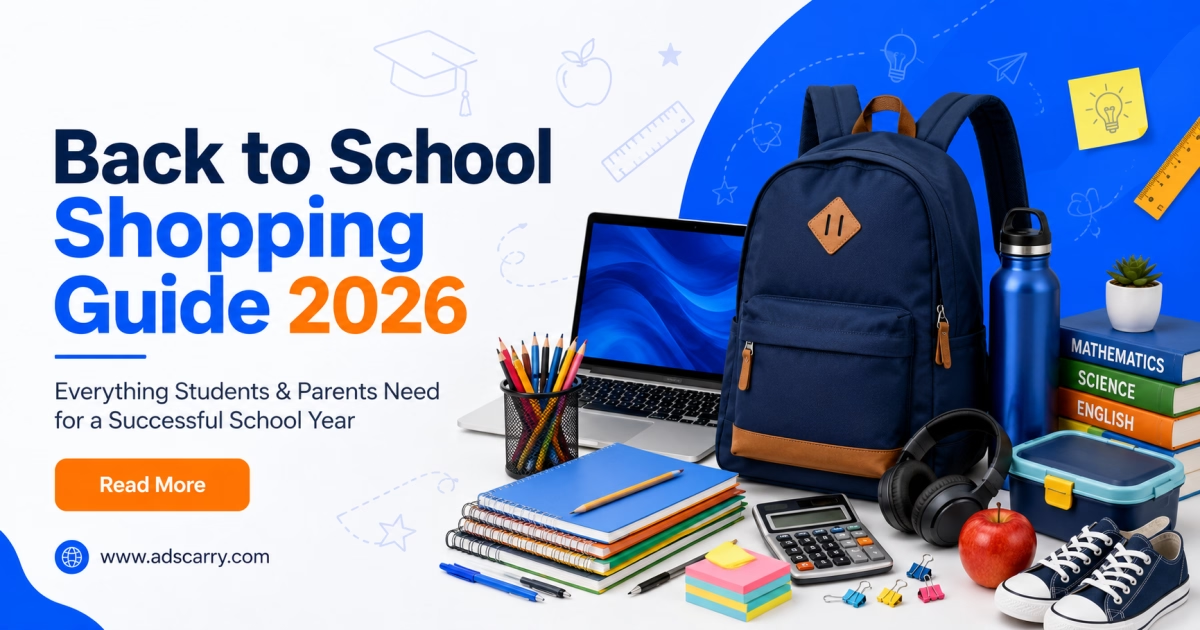
Back to School Shopping Guide USA 2026: Everything Parents Need
The lazy days of summer are already halfway done, and for millions of American parents, that means one thing: it's time to tackle the back to school shopping list. Whether your kids are heading into kindergarten, middle school, high school, or even college for the first time, getting them prepared for a new academic year takes planning — and money.According to the National Retail Federation (NRF), US families with school-age children (K–12) spent an average of $890 per household on back to school shopping in 2025 — the highest figure on record. With prices still elevated across clothing, tech, and supplies in 2026, shopping smart has never been more important.This guide covers every category you need — organized by grade level — along with money-saving strategies, a printable checklist, and links to the best-value products on Adscarry.com.💡 PRO TIP: Most US schools return between August 11–25, 2026. Shopping in late July gives you the widest selection and the best prices before the mid-August rush — and before popular backpack and shoe sizes sell out.What Does Back to School Shopping Cost in the US in 2026?The NRF's annual back to school survey consistently shows that US families underestimate what they'll spend. Here's a realistic breakdown by school level in 2026:School LevelAverage Annual SpendBiggest CostTop Money-Saving StrategyElementary (K–5)$400–$600Clothing & shoesBuy multipacks; shop end-of-season salesMiddle School (6–8)$600–$800Clothes, bag & suppliesReuse last year's backpack if still in good shapeHigh School (9–12)$800–$1,100Clothes, tech & activitiesRefurbished laptops; student discount programsCollege Freshman$1,000–$1,500+Laptop, dorm essentials & textbooksCheck Amazon Prime Student; buy textbooks used 📊 NRF DATA: In 2025, US families spent $38.8 billion total on back to school shopping, making it the second-largest retail season of the year behind the winter holidays. Electronics drove the biggest year-over-year increase.Back to School Shopping Checklist USA 2026: By CategoryWork through each section below and check off what your child already has from last year before buying anything new. Reuse is the easiest way to cut your bill.1. Clothing & ShoesUnlike the UK, most US public schools don't require a formal uniform — but clothing costs can still be substantial, especially when kids want brand-name items. The FTC's guidance on school clothing reminds parents that schools cannot mandate specific brands without offering affordable alternatives. Focus on durable, mix-and-match basics.● T-shirts and tops (5–7 for the week)● Pants, shorts, or jeans (3–5 pairs)● Sweatshirts or hoodies (2–3 — lightweight for fall, heavier for winter)● Athletic wear / PE clothes (check school's requirement)● School shoes (comfortable, durable — sneakers for most schools)● Rain jacket or windbreaker● Backpack (see separate section below)💰 CLOTHING TIP: Tax-free back to school shopping weekends are offered in 17 US states — including Texas, Florida, and Virginia — typically in late July or early August. Check your state's tax holiday dates before you shop.2. Backpacks & BagsA good backpack is one of the most important purchases of the entire back to school season. The American Academy of Pediatrics recommends that a loaded backpack should weigh no more than 10–20% of your child's body weight. Look for padded shoulder straps, a chest strap, and multiple compartments.● Main school backpack (18–25 L for elementary; 25–35 L for middle/high school)● Pencil pouch or case● Lunch box or insulated bag (leak-proof recommended)● Reusable water bottle (stainless steel holds temperature best)● Drawstring gym bag or PE bagSchool LevelRecommended Backpack SizeKey Features to Look ForGrades K–214–18 LLightweight, easy zippers, fun colorsGrades 3–518–22 LPadded straps, reinforced bottomGrades 6–822–28 LLaptop sleeve, water bottle pocketGrades 9–1225–35 LPadded laptop compartment, ergonomic back panelCollege30–40 LUSB charging port, anti-theft features 3. School Supplies & StationeryMost schools send a supply list home before the year starts or post one on their website. Always check the list first — buying generic without it often means you get the wrong items or miss specific requirements (like a particular calculator model).Supply ItemElementary (K–5)Middle School (6–8)High School (9–12)Notes#2 Pencils (12-pack)✓✓✓Mechanical pencils popular in MS/HSBlue & black pens✗✓✓ (2+ each)Some teachers require blue or black onlyRuler (12 inch)✓✓✓Metal preferred for HSEraser (block)✓✓✓White erasers leave less residueScissors✓ (safety)✓✓ (optional)School often supplies in elementaryGlue stick / liquid glue✓Optional✗ Colored pencils or markers✓OptionalArt students only Scientific calculator✗✗ (sometimes)✓ (usually TI-84+)Check school's approved model listHighlighters (4-pack)✗✓✓Essential for note-takingSubject notebooks or binders1–2 notebooks1 binder per subject1 binder per subjectColor-code by subjectSticky notes (Post-its)✗✓✓Great for flagging textbook pagesProtractor & compass set✗✓ (Grade 6+)✓Check school's exact requirements3-hole punch (portable)✗Optional✓Keeps loose handouts organized 4. Technology & ElectronicsTech is now the fastest-growing back to school spending category. A survey by the NRF found that over 60% of parents planned to buy electronics as part of back to school shopping in 2025. Laptops, tablets, and wireless earbuds dominate the list.Do I Need to Buy a Laptop for My Child's School?Most middle and high schools in the US either provide a Chromebook through a 1:1 device program or expect students to have their own device. Always check with the school first. College students almost universally need their own laptop.● Laptop or Chromebook: budget $200–$350; mid-range $400–$700; premium $800+● Laptop sleeve or hard case (if not included)● Wireless mouse — reduces fatigue on long homework sessions● USB-C hub or adapter for laptops with limited ports● Wireless earbuds or headphones — for online classes, focus, and audio● Portable charger / power bank — essential for long school days● Printer + paper (still required for many assignments and projects)💻 LAPTOP BUYING TIP: For grades 6–9, a Chromebook ($200–$300) is highly cost-effective for Google Classroom, docs, and basic schoolwork. For high school juniors and seniors — especially in STEM, design, or business — a Windows laptop ($400–$600) handles more demanding software and will last through college.Should I Buy a Tablet Instead of a Laptop?For elementary students (K–5), a tablet like an Amazon Fire Kids or iPad Mini is often the right call — more durable and age-appropriate. For middle school and up, a laptop is almost always the better investment for typing-heavy schoolwork.5. Textbooks & Reading MaterialsHigh school and college textbooks are one of the most expensive back to school costs — and one of the easiest to reduce. The Consumer Financial Protection Bureau estimates college students spend over $1,200 per year on textbooks and course materials at full retail price. Buying used, renting, or using digital versions can cut that by 50–80%.● Check your school's book list before purchasing anything● Buy used copies from campus bookstores, ThriftBooks, or AbeBooks● Consider renting from Chegg or VitalSource for a fraction of the purchase price● Check your local library — many carry popular textbooks for short-term loan● Elementary and middle school textbooks are usually provided by the school — verify before buying● Summer reading books: check the school's required reading list (typically published in May/June)6. Lunch & Snack Supplies● Insulated lunch box or lunch bag (stainless steel keeps food fresh the longest)● Reusable food containers and snack bags (reduces plastic waste)● Stainless steel or BPA-free water bottle (schools increasingly restrict plastic)● Ice packs (slim profile fits in most lunch boxes)● Utensil set if the cafeteria doesn't provide them7. Health & Wellness Essentials● Hand sanitizer (pocket size for the backpack)● Tissues (pocket pack)● Sunscreen SPF 30+ for outdoor recess and PE● Basic OTC medications if permitted (Tylenol, allergy meds — always check school policy)● Feminine hygiene products for teen girls (many schools now provide free)● Mental wellness: a journal or fidget tool can help anxious studentsGrade-by-Grade Back to School Shopping Guide USAGrades K–2 (Ages 5–8)At this age, the school provides most materials. Focus on clothing, shoes, a sturdy backpack, and a fun first-day outfit. Velcro shoes are easier than laces for kindergartners. Iron-on or stick-on name labels for everything.● Small backpack with fun character design (14–18 L)● Velcro sneakers (no laces until Grade 2)● Safety scissors and a basic pencil case● Reusable water bottle with a spill-proof lid● 5–7 outfits with mix-and-match piecesGrades 3–5 (Ages 8–11)Students start managing more of their own materials. A sturdier backpack with compartments, a proper pencil case, and a homework planner make a big difference.● Backpack with padded straps and laptop sleeve (18–22 L)● Full pencil case with supplies (see stationery list above)● Homework planner or agenda book● Tablet or Kindle for reading assignments (optional)● Sports gear for after-school activitiesGrades 6–8 (Ages 11–14)Starting middle school is a big transition in the US. Organization is key — binders, color-coded folders, and a reliable device for homework and class portals like Google Classroom.● Large backpack with multiple compartments (22–28 L)● One binder or folder per subject (color-coded)● Scientific calculator if required● Chromebook or laptop for homework● Wired or wireless earbuds for studyingGrades 9–12 (High School)High school students often need a laptop capable of running Microsoft Office or Google Workspace, reliable headphones, and dedicated study materials.● Laptop ($400–$700 range recommended for most subjects)● TI-84 Plus graphing calculator (required for most math classes from Algebra II up)● Large ergonomic backpack (25–35 L)● Color-coded binders and subject dividers● Highlighters, sticky notes, and a planner● Dedicated study music headphones or earbudsCollege FreshmenMoving into a dorm is an entirely different shopping category. Beyond school supplies, freshmen need to furnish a small shared room. See our dedicated College Freshman Dorm Essentials Guide for a full checklist covering bedding, kitchen, cleaning, and room décor.● Laptop (15-inch Windows or MacBook recommended for most majors)● All-in-one printer (check if dorm provides printing)● External hard drive or cloud storage subscription● Noise-canceling headphones for studying in shared spaces● USB power strip and extension cord● Backpack (30–40 L with USB charging port)How to Save Money on Back to School Shopping USA 20261. Take advantage of state tax-free weekends. 17 states offer back to school sales tax holidays in late July or early August. Florida, Texas, and Ohio are among the most generous. Check your state revenue department's website for dates.2. Shop at multiple stores. No single retailer wins every category. Compare prices across Adscarry.com, big-box stores, and warehouse clubs before buying.3. Buy electronics refurbished. A certified-refurbished Chromebook or laptop can be 30–50% cheaper than new, with a manufacturer warranty. Look for Certified Refurbished listings.4. Use student and teacher discounts. Apple, Dell, Lenovo, and Microsoft all offer student pricing. Amazon Prime Student gives six months free and 50% off membership.5. Rent textbooks. Renting vs buying can save 50–80%. Chegg, Amazon, and campus bookstores all offer rental programs.6. Buy school supplies in bulk. Packs of pencils, pens, and folders bought in July cost significantly less than buying individually throughout the year.7. Check the school supply list first. Don't buy before you have the list — it avoids buying the wrong calculator model, wrong-color folders, or supplies the school provides.8. Reuse what still works. Last year's backpack, calculator, and binders are often perfectly usable. A quick clean and they're good to go.🏷️ TAX TIP: If you're in a state with a back to school tax holiday, it typically applies to clothing under $100 per item and school supplies under $50 per item. Electronics may or may not qualify — check your state's specific rules.Back to School Shopping Timeline USA 2026When to ShopWhat to BuyWhyLate July (Now)Clothing, shoes, backpack, stationeryWidest selection; best prices before mid-August rushTax-Free Weekend (state varies)Clothing, supplies, possibly electronicsSave 6–10% instantly — no sales taxEarly AugustLaptop, tablet, earbudsSummer tech sales still active; good inventoryMid AugustTextbooks, calculators, foldersSchool supply lists confirmed by nowLate August / First Week of SchoolAny missed itemsLast chance but limited stock in popular sizesSeptember (after school starts)PE gear, art supplies, instrumentsWait for teacher confirmation of exact needsFrequently Asked Questions❓ When should I start back to school shopping in the US?Late July is the ideal time to start. Most US schools return between August 11–25, 2026, so shopping in late July gives you the widest selection of clothing sizes, the best prices before the mid-August demand spike, and time to make exchanges if anything doesn't fit. Many states also hold tax-free back to school weekends in late July or early August.❓ What is the average cost of back to school shopping in the US in 2026?According to the National Retail Federation, US families with K–12 children spent an average of $890 per household on back to school shopping in 2026. Families with college freshmen typically spend $1,000–$1,500+ when including dorm essentials, a laptop, and textbooks. Shopping early, using tax-free weekends, and renting textbooks can significantly reduce these costs.❓ What laptop should I buy for a US middle or high school student?For grades 6–9, a Chromebook ($200–$300) is the most cost-effective choice for Google Classroom, documents, and basic schoolwork. For high school juniors and seniors — especially in STEM, business, or creative fields — a Windows laptop in the $400–$600 range handles more demanding software and will last through the first year of college. Always check what learning management system (Google Classroom vs Schoology vs Canvas) the school uses before purchasing.❓ Do US schools provide school supplies for students?It varies by grade and district. Most US elementary schools ask parents to buy basic supplies from a provided list (pencils, folders, crayons, glue sticks). Middle and high schools typically require students to bring their own supplies. Some districts provide supplies for low-income students through Title I funding — check with your school's front office if you have concerns about costs.❓ Which states have back to school tax-free weekends in 2026?Seventeen states offer back to school sales tax holidays, typically in late July or early August. Major examples include Florida (late July–early August), Texas (August), Ohio (August), Virginia (August), and Missouri (August). Savings typically apply to clothing under $100 per item and school supplies under $50 per item. Electronics vary by state — some include computers, others don't. Check your state revenue department's official website for exact dates and qualifying items.❓ Where can I find the cheapest school supplies in the US?The most cost-effective sources for school supplies in 2026 are: warehouse clubs like Costco and Sam's Club for bulk stationery; dollar stores for basic supplies (folders, pencils, erasers); Adscarry.com for price comparison across multiple sellers; and end-of-season sales in mid-August to September, when retailers discount remaining inventory. 🛒 SHOP BACK TO SCHOOL ON ADSCARRY.COMCompare prices across hundreds of US sellers on everything from backpacks and school supplies to laptops and clothing. Find the best back to school deals in the US right now.→ Shop Back to School Deals on Adscarry.com